Katharine
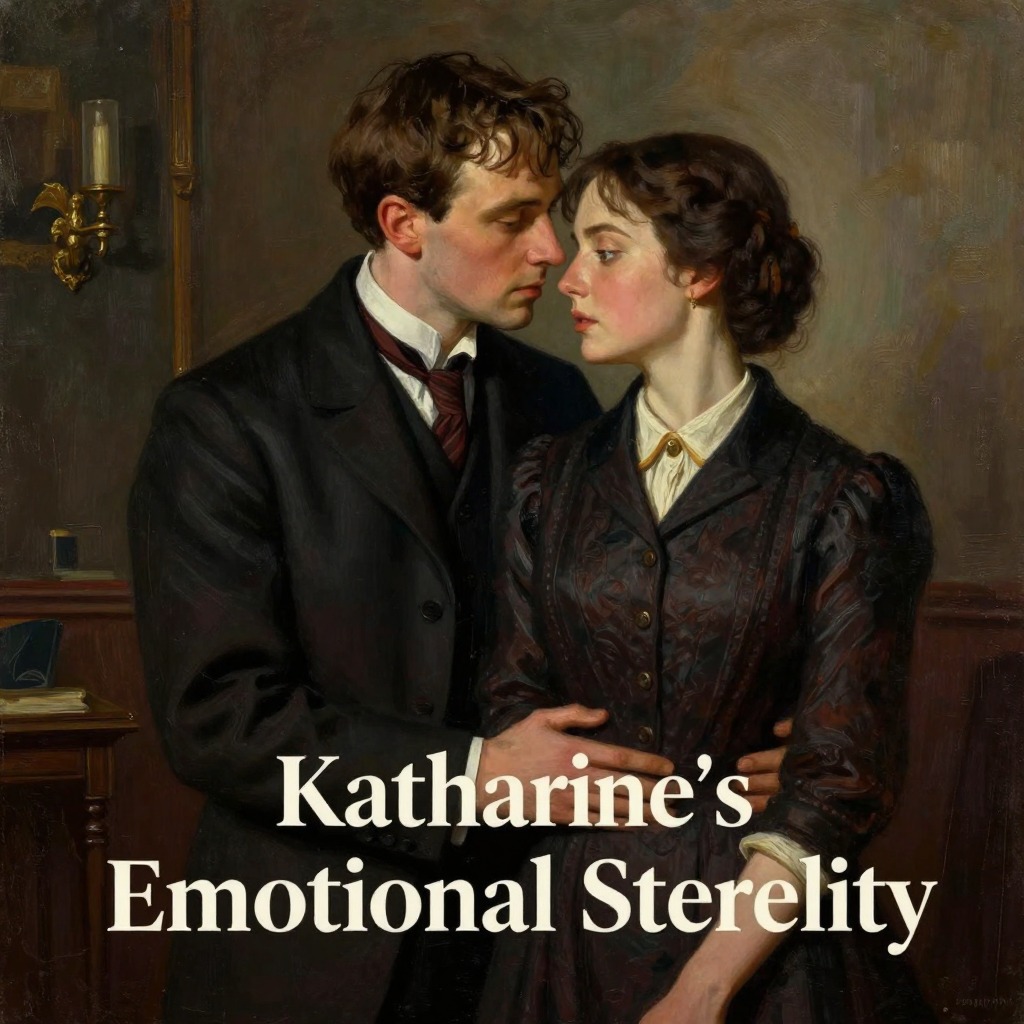
Katharine, the estranged wife of Winston Smith, never appears in the present action of Nineteen Eighty-Four; she exists entirely in her husband's memory, yet their fifteen-month marriage is one of the book's clearest demonstrations of what the Party does to human intimacy. Winston recalls her as a tall, fair-haired, very straight girl with splendid movements and a bold, aquiline face, a woman so completely remade by Party doctrine that he privately nicknamed her "the human sound-track."
Marriage under the Party
They were together for only about fifteen months, and nearly eleven years have passed since they parted. The Party did not permit divorce, but it encouraged separation when a marriage produced no children, so Katharine and Winston drifted apart without any formal rupture; Winston could go for days at a time forgetting that he had ever been married. He knows she is probably still alive, which makes her a strange kind of survivor in a novel where people are routinely vaporized. Under the Party's rules all marriages between Party members had to be approved by a committee, and permission was always refused for couples who seemed physically attracted to each other; the only recognized purpose of marriage was to beget children for the service of the Party. Katharine is the living proof of this system: she is not a rebel or a victim of the Thought Police, but a willing, orthodox participant.
The Human Sound-track: An Empty Orthodox Mind
Winston's verdict on Katharine is harsh and specific: she had, without exception, the most stupid, vulgar, empty mind he had ever encountered. There was not a thought in her head that was not a slogan, and no imbecility, absolutely none, that she was not capable of swallowing if the Party handed it out to her. Her total absorption of propaganda makes her the perfect complement to the Party's apparatus of falsification: a woman whose mind has been so thoroughly filled with official language that no private thought can survive. Julia later confirms this type exists, recognizing the word "goodthinkful" -- naturally orthodox, incapable of thinking a bad thought -- and acknowledging that the Party rubs it into girls for years. Katharine is so orthodox, in fact, that Winston believes she would have denounced him to the Thought Police if she had not been too stupid to detect the unorthodoxy of his opinions.
Sex as Duty: The Collapse of the Marriage
Their marriage foundered on sex. As soon as Winston touched Katharine she seemed to wince and stiffen; embracing her was like embracing a jointed wooden image, and even when she clasped him against her he felt she was simultaneously pushing him away with all her strength. She lay with shut eyes, neither resisting nor co-operating, but submitting. Yet it was Katharine who refused to agree to a celibate marriage: they must, she said, produce a child if they could. She reminded him of the weekly obligation in advance, and had two names for it, "making a baby" and "our duty to the Party." To Winston this was torture; he came to dread the appointed day, and when no child appeared Katharine at last agreed to give up trying, and soon afterwards they parted. The memory resurfaces years later when he tells Julia the story, and Julia completes it before he can -- "Our duty to the Party," she says -- showing that Katharine is not an isolated freak but the standard product of Party education.
On a lost community hike in Kent, at the edge of an old chalk quarry, Winston once stood alone with Katharine in the hottest hour of a summer afternoon and the thought struck him that he could push her over; he did not, and years later he tells Julia he is sorry he did not, though he knows it would have made no difference. Julia's instant reply -- "I would have" -- marks the divide between the two women.
Katharine's Absence: The Obstacle and the Antithesis
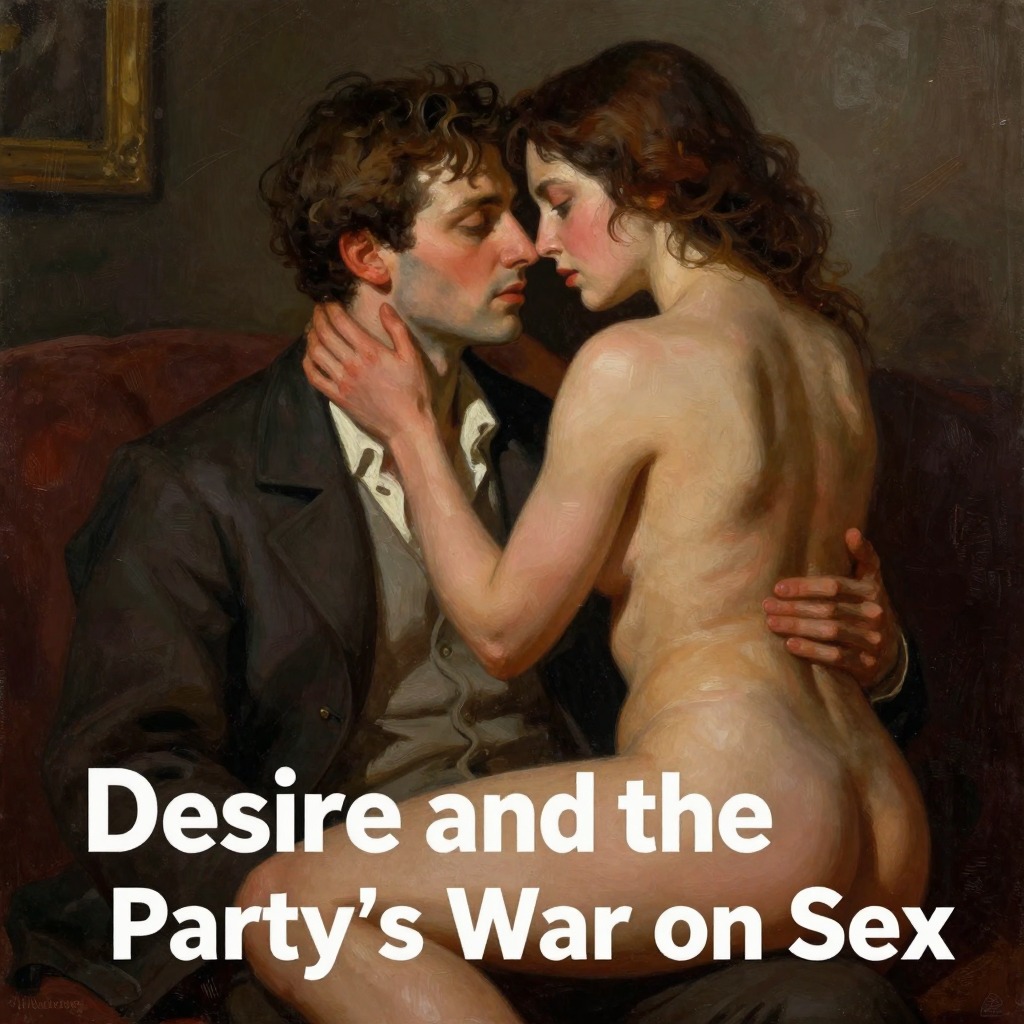
Winston sees Katharine's body, in retrospect, as frozen for ever by the hypnotic power of the Party, the sexual instinct driven out of Party women by careful early conditioning, games, cold water, lectures, parades and slogans. That frozen quality is precisely what makes Katharine Julia's antithesis. Where Julia rips off the scarlet sash and smuggles real coffee and chocolate into the rented room, Katharine's body is remade by the Party. Yet both women are shaped by the same system: Julia must perform orthodoxy for survival, while Katharine is orthodoxy. In their hiding-place, Winston and Julia daydream about escape, sometimes imagining that Katharine would die so they could marry, though they know no committee would ever sanction such a marriage. Even as a daydream it was hopeless; Katharine remains in the background of the novel as the obstacle that cannot be removed by any legal means. Her continued existence haunts the love story without ever entering the present.
The Human Cost of Party Marriage
Katharine's significance is not merely personal. Through her, Orwell shows that the Party's war on desire is institutional: marriage committees, sexual puritanism, and the equation of sex with a slightly disgusting minor operation. Her empty, slogan-filled mind is the human result of a system that rewrites the past until memory itself is unreliable. If Oceania produces tormented rebels like Winston, it also produces -- far more successfully -- the Katharines, who need no coercion because they have internalized the Party completely.